Tech
Top Tech Trends in 2025 That Are Changing the World
2025 tech trends like generative AI, metaverse learning, wearable health, and smart sustainability are transforming life and careers. Staying updated is key for students, professionals, and innovators alike.

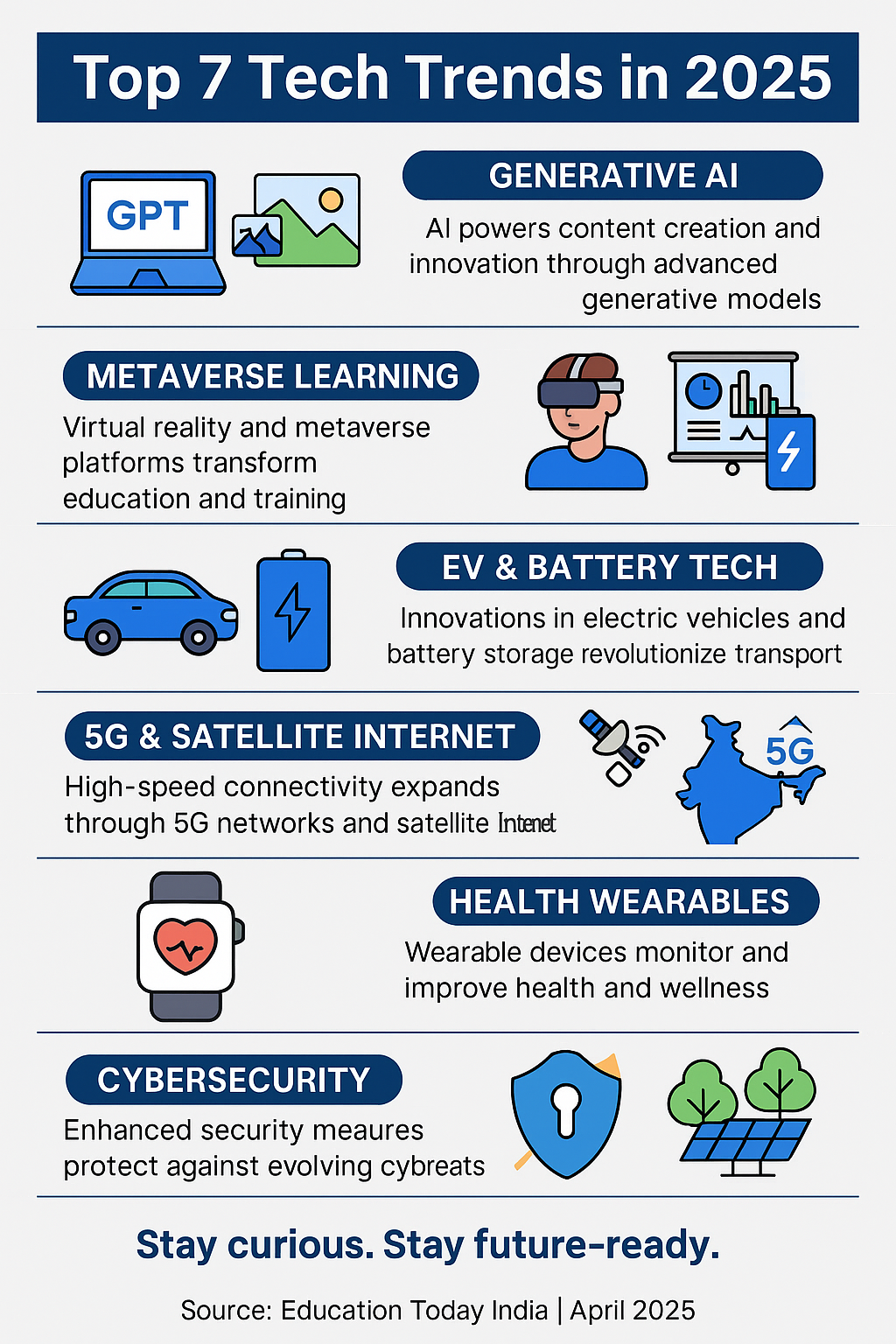
Technology in 2025 is advancing faster than ever before. From artificial intelligence shaping how we learn and work, to immersive virtual worlds and green energy breakthroughs, this year’s innovations are creating a smarter, more connected future. Whether you’re a student, entrepreneur, or just curious about the future, here are the top tech trends dominating 2025.
🤖 1. Generative AI Becomes Everyday AI
No longer limited to tech labs, Generative AI (like ChatGPT, Midjourney, and others) is now used in schools, marketing, design, and even healthcare. It’s helping students write smarter, creators design faster, and businesses respond better.
➡️ Trend Tip: Students and professionals are learning prompt engineering as a real skill to get the most out of AI tools.
🌐 2. Metaverse for Education and Work
The Metaverse isn’t just for gaming anymore. In 2025, schools and companies are using virtual campuses, 3D classrooms, and digital avatars for immersive learning and meetings. Platforms like Meta Horizon, Spatial, and Virbela are leading the way.
➡️ Why it matters: It makes remote education feel real, collaborative, and engaging.
🔋 3. Battery Tech & EVs Go Next Level
With range anxiety finally fading, solid-state batteries and faster EV charging are booming. Companies like Tesla, Toyota, and Ather are launching eco-friendlier, long-lasting electric vehicles.
➡️ Green Bonus: India is also investing in EV infrastructure and sustainable battery recycling.
📡 4. 5G and Satellite Internet Revolution
Thanks to 5G expansion and satellite internet from companies like Starlink, even remote areas now enjoy high-speed internet. This is bridging digital divides in education, agriculture, and small businesses.
➡️ In India: Rural schools and startups are now connecting globally with ease.
🧬 5. Biotech & Wearables for Health
From AI-powered diagnosis to smart rings and watches that track stress, sleep, and sugar levels in real time — 2025 is turning healthcare into “health-tech.”
➡️ What’s hot: Personalized health insights, fitness gamification, and real-time doctor alerts.
🛡️ 6. Cybersecurity Gets Smarter
With growing data threats, companies are investing in AI-based cybersecurity tools that can predict and prevent cyberattacks. Zero-trust security models and biometric authentication are trending.
➡️ For students: Cybersecurity courses and ethical hacking are booming career paths!
🌍 7. Sustainability Tech
Whether it’s carbon capture, AI-powered agriculture, or smart homes, 2025 tech is focused on saving the planet. Cities are using tech to monitor air quality, optimize energy use, and reduce plastic.
➡️ The future is green: Sustainable startups are gaining big investments.
🧠 Final Thoughts
The future is now — and it’s incredibly exciting. Whether you’re a student choosing your next career path, a teacher guiding young minds, or a curious explorer of innovation, staying updated with trending tech is no longer optional — it’s essential.
💡 Embrace it, learn it, and lead with it.

Tech
NASA Astronaut Jonny Kim, Crewmates Return from Space Station
The Soyuz MS-27 spacecraft is seen as it lands in a remote area near the town of Zhezkazgan, Kazakhstan, with Expedition 73 NASA astronaut Jonny Kim, and Roscosmos cosmonauts Sergey Ryzhikov, and Alexey Zubritsky aboard, Dec. 9, 2025. Credit: NASA/Bill Ingalls
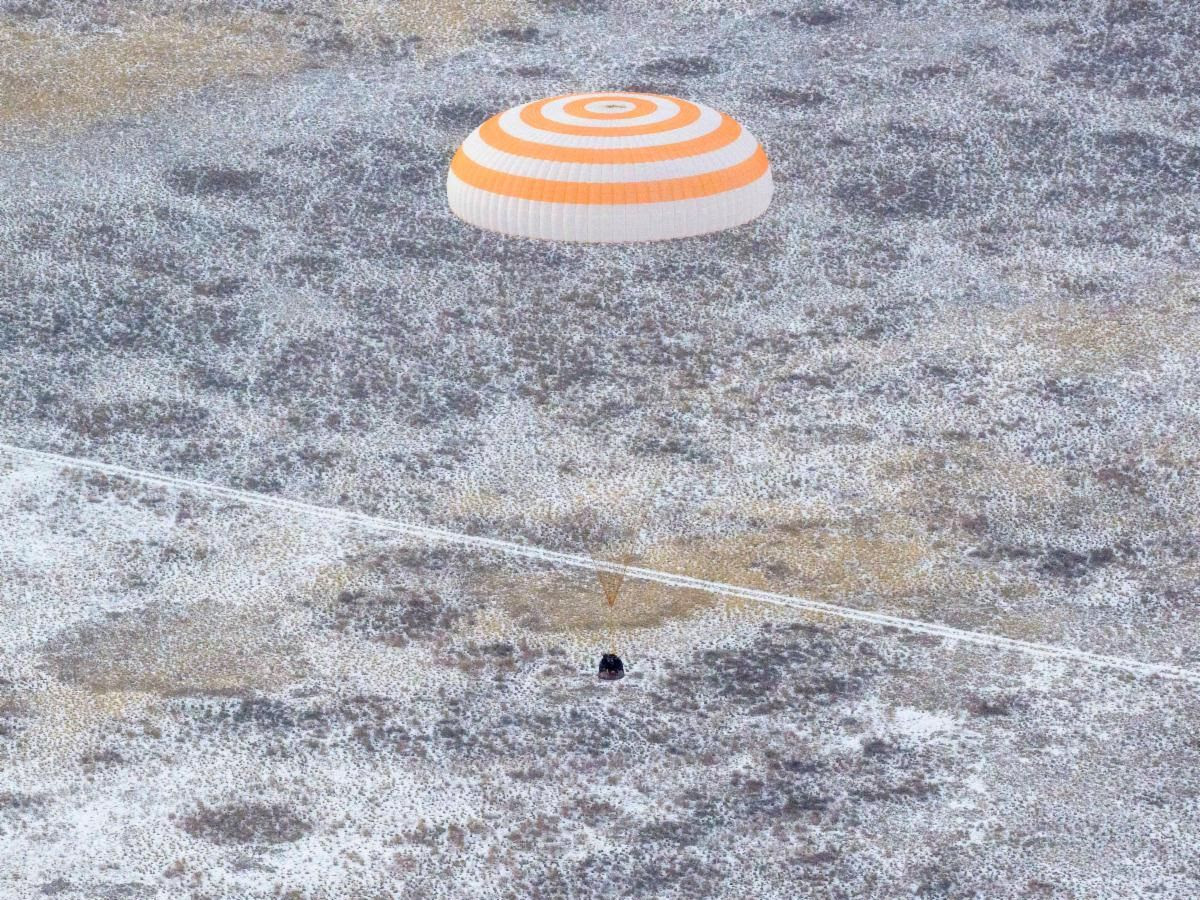
NASA astronaut Jonny Kim returned to Earth on Tuesday alongside Roscosmos cosmonauts Sergey Ryzhikov and Alexey Zubritsky, wrapping up an eight-month science mission aboard the International Space Station to benefit life on Earth and future space exploration.
Safe Landing in Kazakhstan
They made a safe, parachute-assisted landing at 12:03 a.m. EST (10:03 a.m. local time), southeast of Dzhezkazgan, Kazakhstan, after departing the space station at 8:41 p.m. on Dec. 8, aboard the Soyuz MS-27 spacecraft.
Mission Overview: 245 Days in Space
Over the course of 245 days in space, the crew orbited Earth 3,920 times, traveling nearly 104 million miles.
They launched to the space station on April 8.
This mission marked the first spaceflight for both Kim and Zubritsky, while Ryzhikov completed his third journey to space, logging a total of 603 days in orbit.
Scientific Contributions
While aboard the ISS, Kim contributed to a wide range of scientific investigations and technology demonstrations, including:
Bioprinted Tissues Research
He studied the behavior of bioprinted tissues containing blood vessels in microgravity for an experiment helping advance space-based tissue production to treat patients on Earth.
Surface Avatar Robotic Study
He evaluated the remote command of multiple robots in space for the Surface Avatar study, which could support the development of robotic assistants for future exploration missions.
Nanomaterial Manufacturing
Kim also worked on developing in-space manufacturing of DNA-mimicking nanomaterials, which could improve drug delivery technologies and support emerging therapeutics and regenerative medicine.
Post-Landing Procedures
Following post-landing medical checks, the crew will return to the recovery staging area in Karaganda, Kazakhstan.
Kim will then board a NASA aircraft bound for the agency’s Johnson Space Center in Houston.
25 Years of Continuous ISS Operations
For more than 25 years, people have lived and worked continuously aboard the International Space Station, advancing scientific knowledge and making research breakthroughs that are not possible on Earth.
The station serves as a critical testbed for NASA to understand and overcome the challenges of long-duration spaceflight and to expand commercial opportunities in low Earth orbit.
As commercial companies take on human space transportation and orbital destinations as part of a robust low Earth orbit economy, NASA is shifting its focus to deep space missions, including the Artemis campaign to the Moon, in preparation for future human missions to Mars.
Learn More
Learn more about International Space Station research and operations at:
🔗 https://www.nasa.gov/station
Tech
AI in Education: Opportunities and Challenges – Insights from Syed Sultan Ahmed
AI is revolutionizing education with personalized learning and efficiency, but concerns about data privacy and teacher roles persist, says TAISI.

Artificial Intelligence (AI) is rapidly reshaping the education sector, offering remarkable advantages such as personalized learning, improved teaching efficiency, and reduced administrative workload. However, its integration also brings forward critical concerns, particularly around data privacy and the disruption of traditional teaching models.
Syed Sultan Ahmed, Chairperson of The Association of International Schools of India (TAISI), shares his perspective on how AI can be a powerful tool in the hands of educators. He stresses that while AI can streamline operations and tailor education to individual student needs, it must not overshadow the essential role of teachers.
“Technology can assist, but it cannot replace the human connection that forms the heart of effective teaching,” Ahmed remarked.
As educational institutions explore AI solutions, Ahmed urges a balanced approach—leveraging AI to enhance learning without compromising ethical standards or the teacher-student relationship.
This evolving conversation invites educators, students, and policymakers to rethink how learning environments can blend innovation with empathy and integrity.
- Snapshot: AI in Education – Insights from Syed Sultan Ahmed
- AI is transforming education with personalized learning and improved teaching efficiency.
- Key concerns: data privacy and impact on traditional learning models.
- Syed Sultan Ahmed (TAISI Chairperson) highlights AI’s role in easing admin tasks and enhancing learning.
- Human element is key – teachers remain irreplaceable for mentoring and emotional support.
- Balanced approach needed to blend innovation with responsibility.
- 🎧 Listen to the full discussion on WION Podcast:
https://youtu.be/WT8bdhiS-fA?si=0nr-2-xWg4rDSKFU
Tech
Elon Musk and Neuralink: A Future Without Phones?
Elon Musk envisions a future without phones—Neuralink could enable instant brain-to-brain communication, revolutionizing education, learning, and connectivity.

Elon Musk has made several bold statements about the future of technology, and one of the most fascinating involves his brain-machine interface company, Neuralink. According to Musk, the day may come when phones are no longer necessary—because Neuralink could allow us to communicate directly with our thoughts.
Imagine a world where sending a message, searching the internet, or even learning something new happens instantly, without the need for a screen or keyboard. Musk has suggested that Neuralink could one day enable faster-than-speech communication, making current devices like smartphones obsolete.

For the world of education, this technology could be revolutionary. Students might access information instantly, learn languages in record time, or receive personalized tutoring directly through neural interfaces. Classrooms of the future could look very different—with no need for books, tablets, or even traditional teaching methods.
Whether this future excites or concerns you, it’s clear that Neuralink is pushing the boundaries of what’s possible. The question is: are we ready for it?
-
 Exams & Results1 year ago
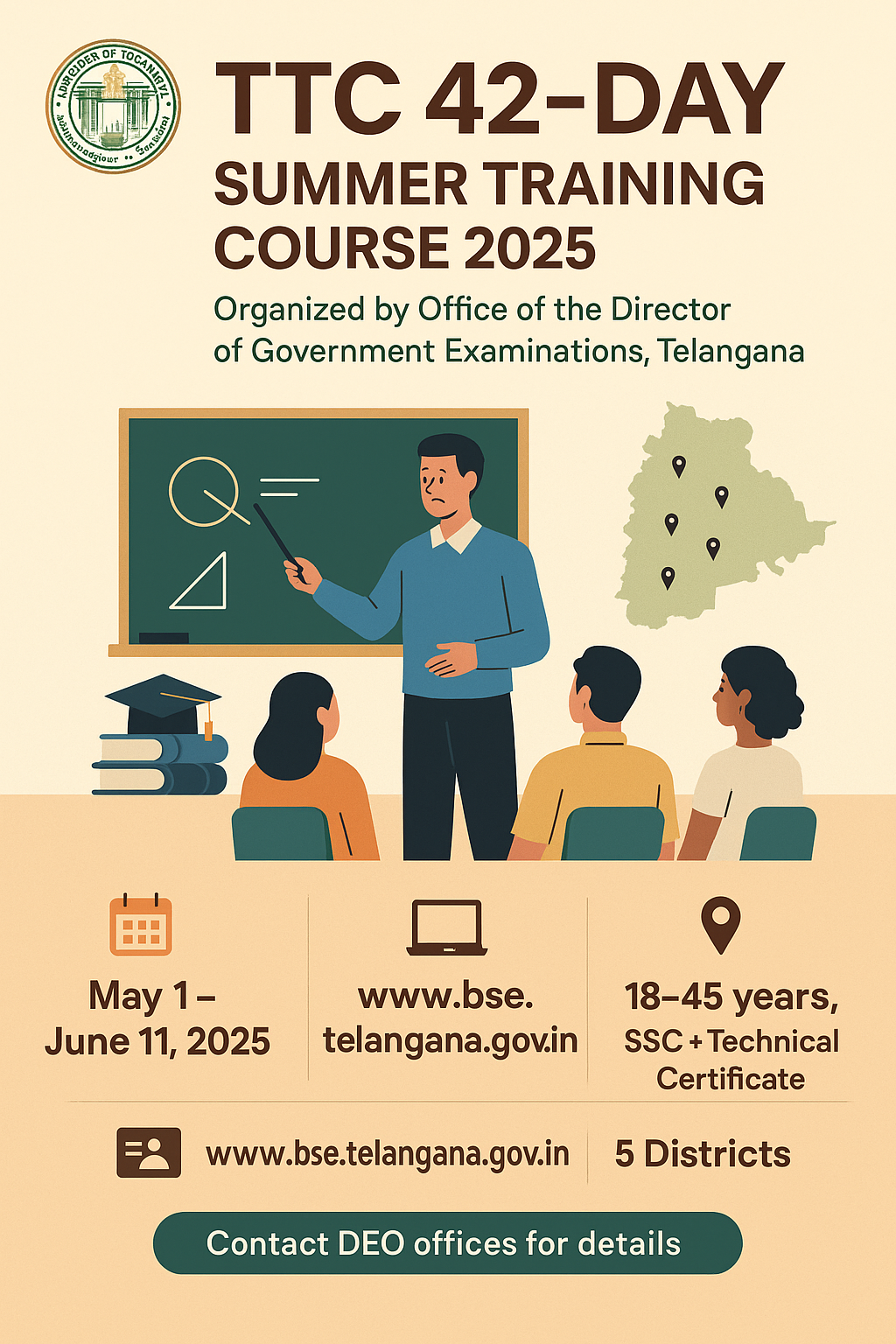
Technical Teacher’s Certificate (TTC) 42-Day Summer Training Course Announced in Telangana
-
 News1 year ago
One Board, One System? Telangana May Merge Inter & School Boards
-

 Scholarships1 year ago
Indian Army Recruitment 2025–26: Registration for Agniveer Selection Extended – Apply Now
-

 Exams & Results1 year ago
Top Competitive Exams in May 2025: Key Dates, Details, and How to Prepare
-

 Sports2 years ago
IPL Auction 2025: Big Buys, Surprise Picks, and New Team Strategies
-

 Sports2 years ago
Why Only Cricket Gets the Spotlight in Indian Sports and What Will Happen if We Don’t Address It
-
 Scholarships1 year ago
Latest Scholarships: National and International Opportunities 2025
-

 Careers & Jobs1 year ago
Accenture to Promote 50,000 Employees Globally This June