
Opinions
Who Should Be Fined for Potholes? Rethinking Road Safety in Hyderabad
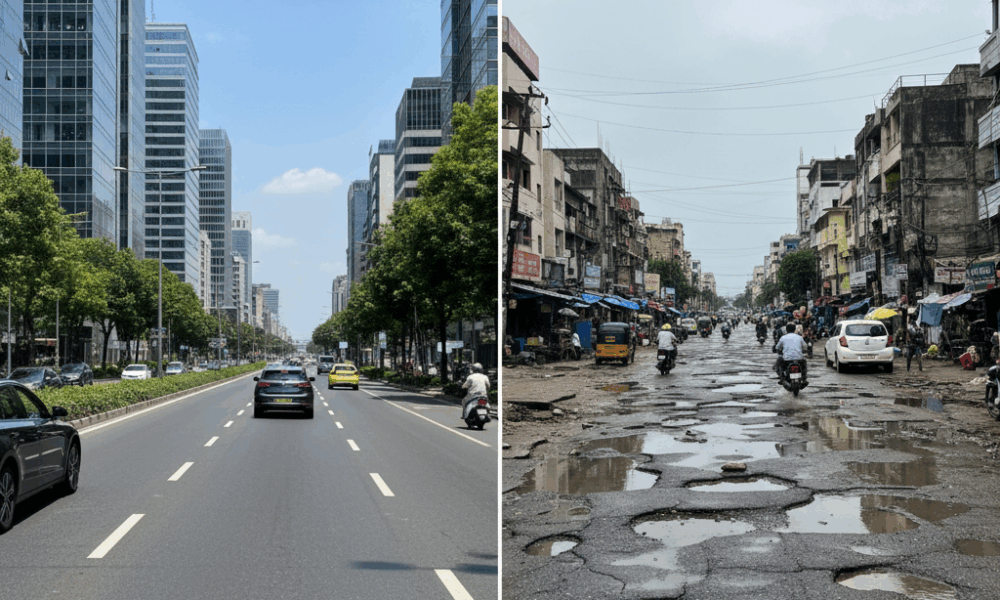
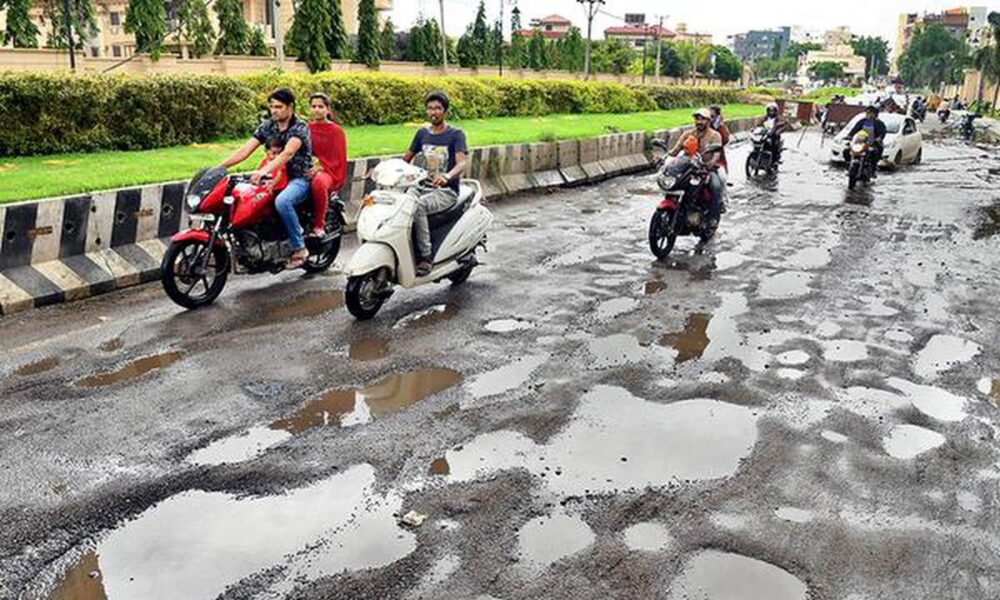
“Hyderabad’s roads after rains have turned into safety hazards. If citizens are fined for not wearing helmets, shouldn’t authorities be held accountable for potholes that endanger lives?”


“If Riders Are Fined, Why Not Administrators for Unsafe Roads?”
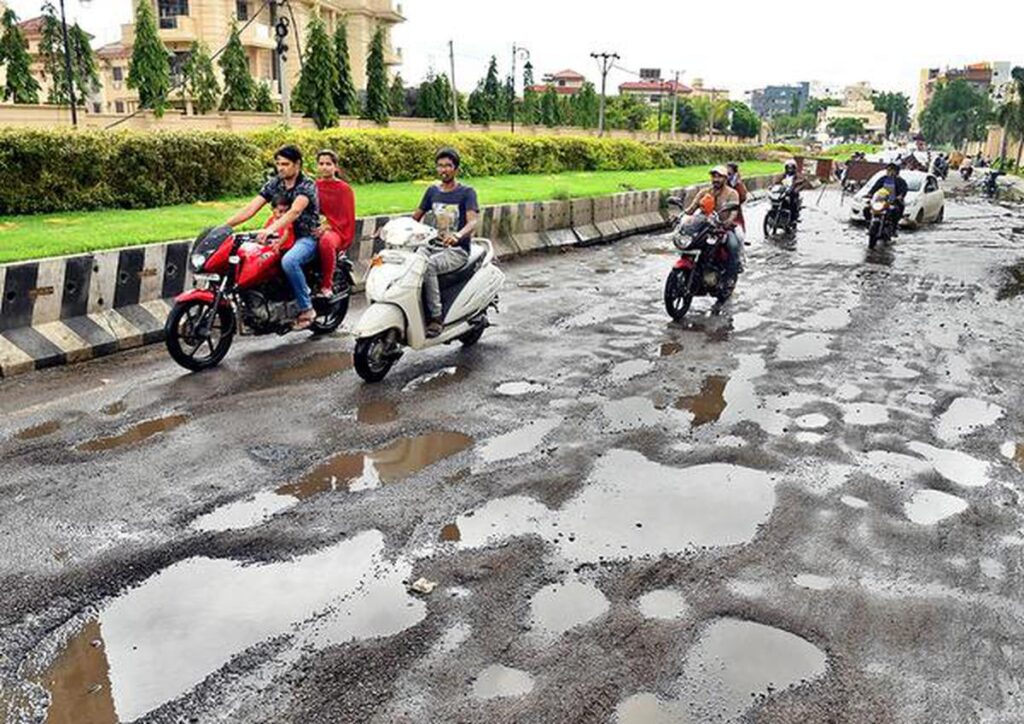
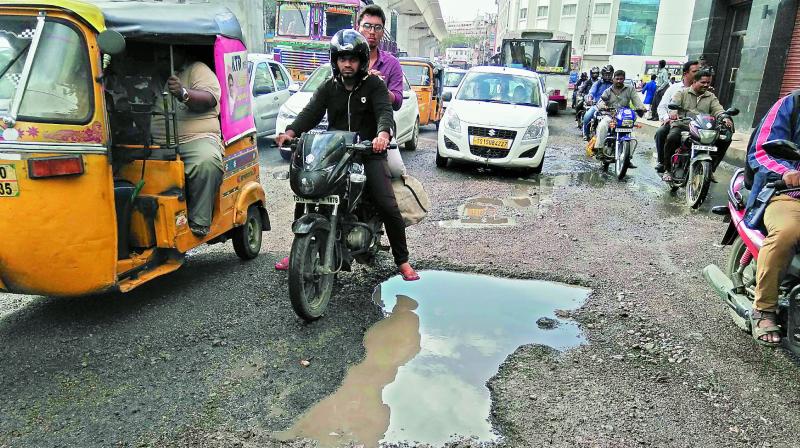
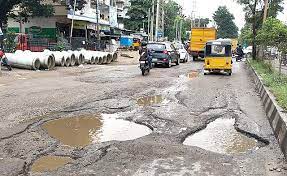
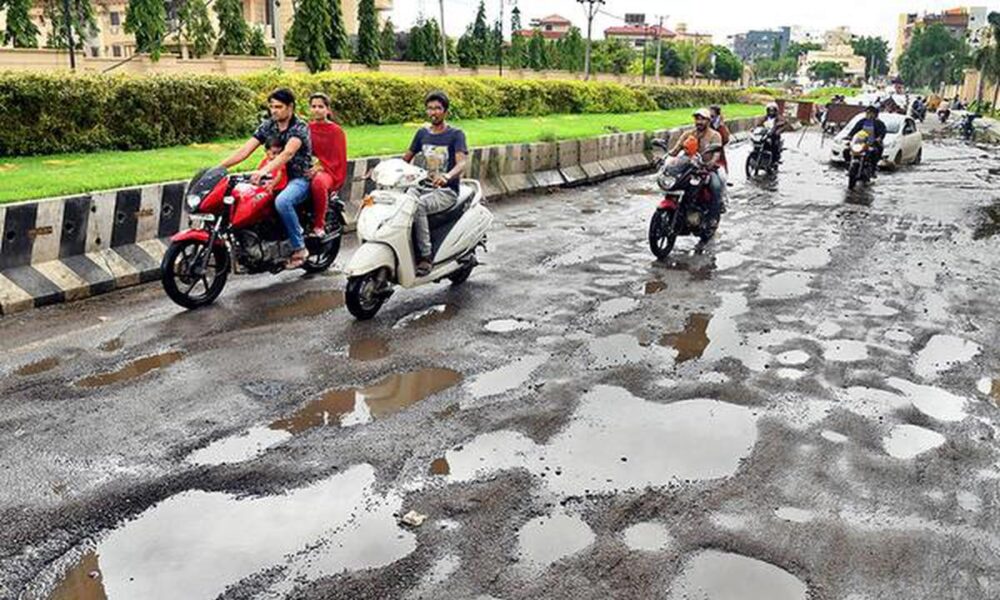
Hyderabad, often celebrated as a city of growth and innovation, is unfortunately battling a recurring crisis—pothole-ridden roads after every spell of rain. What should have been smooth drives across a thriving metropolis have instead turned into hazardous journeys. For citizens, driving or riding through the city has become an exercise in constant vigilance, with safety hanging in the balance.

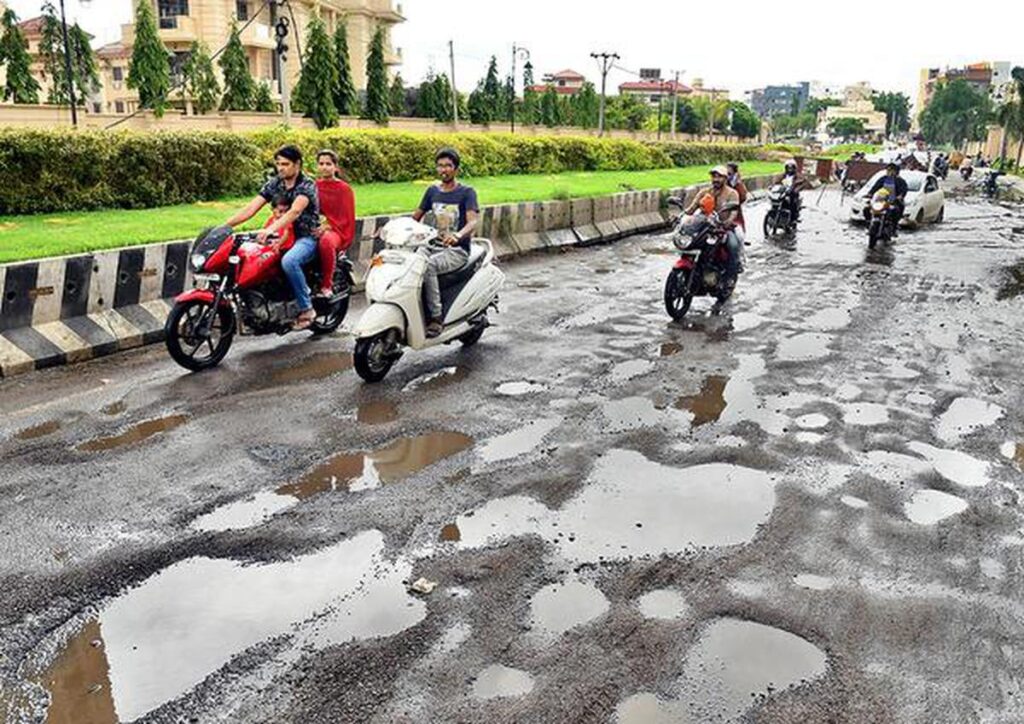
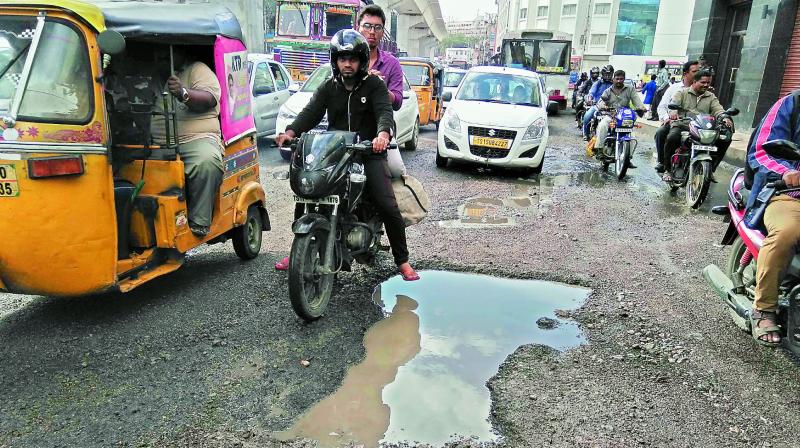
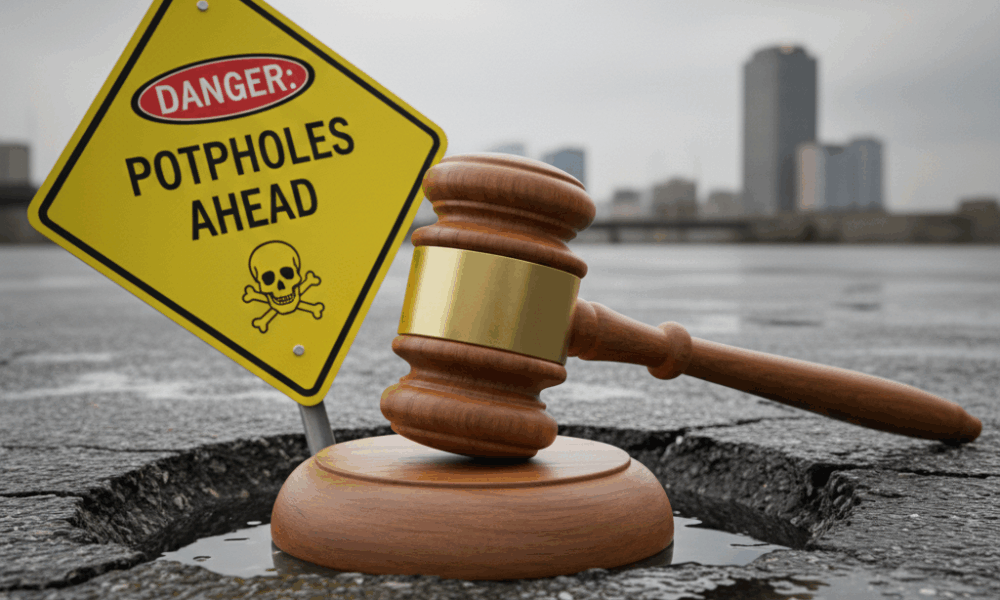
When a two-wheeler rider is caught without a helmet, the law rightly steps in to impose a fine. The reasoning is simple: compromising personal safety not only endangers the rider but also increases risks for other road users. However, the glaring irony is that when potholes compromise the safety of drivers, riders, and pedestrians alike, accountability often disappears into silence. The question then arises—if an individual is fined for neglecting self-safety, shouldn’t authorities be penalized for neglecting public safety?
The Public Safety Paradox
Roads are public assets maintained by government agencies using taxpayers’ money. Citizens are held accountable for traffic violations under the Motor Vehicles Act, but there is no parallel framework that holds authorities accountable for neglecting the condition of roads. This creates an imbalance—citizens are answerable for their safety, but administrators are not held liable when unsafe infrastructure endangers lives.
Potholes do more than cause inconvenience. They damage vehicles, delay commutes, increase fuel consumption, and most dangerously, cause accidents. Countless cases of two-wheeler riders being thrown off balance due to sudden potholes go unnoticed until they turn fatal. In such cases, should responsibility rest solely on the rider, or should it extend to those responsible for maintaining safe roads?
Accountability as a Law
India has strict traffic rules for citizens, but very few enforceable laws for government negligence in road safety. What if a system existed where administrative authorities faced fines—or stricter consequences—for failing to maintain basic road safety standards? Such accountability would not only ensure the prompt repair of potholes but also embed a culture of responsibility within governance.
This is not a radical demand but a logical extension of existing principles of justice. If road safety is a shared responsibility, then accountability cannot be one-sided. Just as a rider without a helmet is seen as compromising safety, a pothole left unattended is equally, if not more, dangerous to public safety.
Learning from Global Practices
In several developed countries, municipalities can be sued for accidents caused by poorly maintained roads. Citizens have the legal right to claim compensation if infrastructure negligence endangers them. While India does have provisions under tort law and public interest litigation (PIL), the process is often long, exhausting, and inaccessible for the common man. A dedicated law or policy that directly addresses this issue could bring much-needed reform.
Towards Safer Roads in Hyderabad
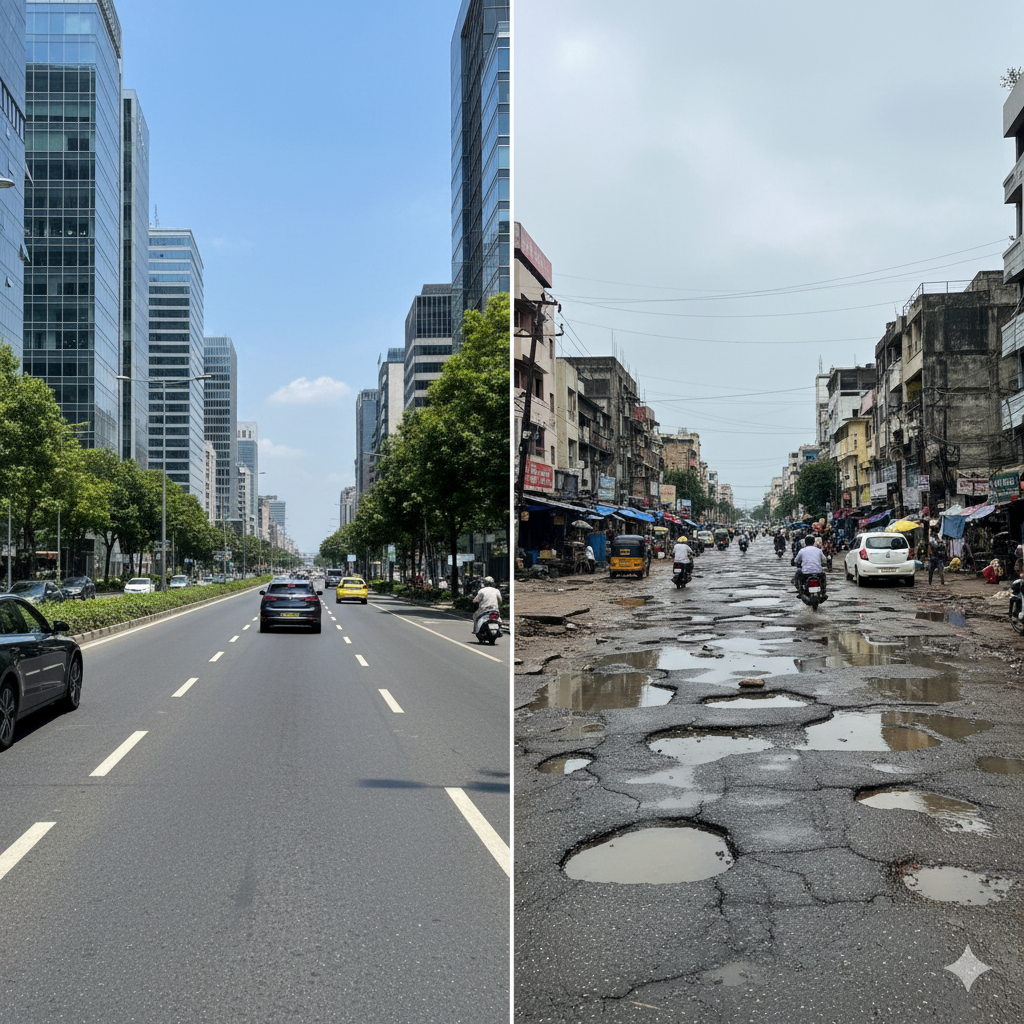
The issue is not limited to Hyderabad; it is symptomatic of urban governance across India. However, Hyderabad’s rapid urbanization makes it a case study of why road safety cannot be viewed only through the lens of traffic discipline. Citizens deserve roads that are as safe as the rules they are expected to follow.
Introducing a law to fine or penalize administrative negligence may sound unconventional, but it is time we shift the debate from blame to accountability. Road safety is not only about helmets, seat belts, or speed limits—it is also about ensuring that the very roads we travel on do not become death traps.
Conclusion
As Hyderabad continues its journey toward becoming a global city, it must prioritize infrastructure safety with the same seriousness it shows in enforcing traffic rules. Citizens have a duty to follow the law, but governments have an equal, if not greater, duty to provide safe roads. Until accountability becomes a two-way street, road safety will remain incomplete.
It is high time we asked: if potholes cause accidents, who should be fined?





Inspiration
Hyderabad Student Wins Gold at International Chemistry Olympiad 2025
Narayana student Kuchi Sandeep wins gold at International Chemistry Olympiad 2025 in UAE, showcasing India’s talent and dedication globally.

Hyderabad: Kuchi Sandeep, a student of Narayana Educational Institutions, has bagged the gold medal at the International Chemistry Olympiad 2025 held in the UAE from July 5 to 14.
Representing India as one of the four official team members, Sandeep competed against some of the brightest young chemistry minds globally, showcasing exceptional talent and dedication. His achievement reflects the rigorous mentorship and structured preparation provided by Narayana, the institution noted in a press release.
Dr. Sindhura Narayana, Director of Narayana Educational Institutions, said Sandeep’s success is a proud moment for both Narayana and the nation.
“Our Olympiad preparation framework is rooted in deep conceptual understanding, disciplined methodology, and personalised mentoring—empowering students to excel in national and international competitions. Sandeep’s journey exemplifies the heights that can be reached when talent is nurtured with purpose and passion,” she added.
#EducationToday #Hyderabad #NarayanaEducationalInstitutions #InternationalChemistryOlympiad #StudentAchievement
Inspiration
Hyderabad’s Faizan Zaki Crowned Spelling Bee Champion 2025
Faizan Zaki, 13, originally from Hyderabad, wins 2025 Scripps National Spelling Bee with the word “éclaircissement” after years of dedication.

A proud moment for Hyderabad and India! Faizan Zaki, a 13-year-old originally from Hyderabad and now living in Allen, Texas, has won the 97th Scripps National Spelling Bee by correctly spelling “éclaircissement,” meaning “the clearing up of something obscure: enlightenment.”

Adam Symson and Speller 207, Faizan Zaki of Allen, Texas, representing Dallas Sports Commission, winner of the 2025 Scripps National Spelling Bee on May 29, 2025 in National Harbor, MD.
Faizan’s remarkable journey:
- 2019 – 370th place
- 2023 – 21st place
- 2024 – 2nd place (runner-up)
- 2025 – Champion
Representing the Dallas Sports Commission, Faizan became only the fifth person in the Bee’s history to win after being the runner-up the previous year.
Prizes he received include:
- $50,000 cash prize and the Scripps Cup from Scripps
- $2,500 and reference library from Merriam-Webster
- $400 in reference works and a 3-year Britannica Online Premium membership from Encyclopædia Britannica
- $1,000 Scholastic Dollars for a school of his choice
- A 5-year subscription to News-O-Matic for his school
In the 100th year of the Spelling Bee, Faizan’s victory represents determination, perseverance, and excellence. His achievement is a proud milestone for the Indian and Hyderabadi community around the world.
For more details and results, visit: www.spellingbee.com
Opinions
Daycare vs Preschool vs Kindergarten: Understanding the Differences for Your Child’s Early Education

When it comes to early childhood education, parents often find themselves deciding between daycare, preschool, and kindergarten. Each of these options serves a unique purpose, and understanding the differences can help you make an informed decision based on your child’s needs, development, and readiness.
Daycare: A Safe Place for Your Child to Grow and Play
Purpose: Daycare primarily focuses on providing a safe environment for children when parents are working or need childcare support. It’s less about formal education and more about socialization and care.
Age Group: Typically for children aged 6 weeks to 4 years.
Features:
- Emphasis on care and supervision.
- Activities that encourage social interaction, play, and learning through exploration.
- Flexible hours to accommodate working parents.
- Less structured, with a focus on building social and emotional skills.
Pros:
- Offers flexible scheduling.
- Provides a nurturing environment for infants and toddlers.
- Helps children develop early social skills.
Cons:
- Less focus on academic learning.
- May have larger child-to-caregiver ratios.

Preschool: The First Step Toward Formal Education
Purpose: Preschool serves as a bridge between daycare and kindergarten. It introduces children to structured learning while still prioritizing play-based education.
Age Group: Generally for children aged 3 to 5 years.
Features:
- More structured than daycare, with a focus on basic academic skills like numbers, letters, shapes, and colors.
- Early exposure to social norms, sharing, and teamwork.
- Learning through hands-on activities, storytelling, and creative play.
- Prepares children for kindergarten by promoting early literacy and numeracy.
Pros:
- Balanced curriculum that combines academic learning with play.
- Smaller class sizes, allowing more individualized attention.
- Helps children develop a routine and social skills in preparation for formal school.
Cons:
- Still not as structured as kindergarten.
- May not be available with flexible hours.

Kindergarten: The Start of Formal Education
Purpose: Kindergarten is a formal education setting where children are prepared for primary school. It’s a structured environment that combines academics with social and emotional development.
Age Group: For children aged 5 to 6 years (depending on the country/region).
Features:
- A more structured environment compared to daycare and preschool, with set hours and a curriculum that focuses on literacy, math, science, and social studies.
- Kindergarten prepares children for the expectations of elementary school, including more structured learning and discipline.
- A mix of group activities, independent work, and teacher-led lessons.
Pros:
- Focuses on academic readiness, particularly in reading, writing, and math.
- Provides a strong foundation for further education.
- Teaches responsibility, teamwork, and following a schedule.
Cons:
- More formal and less flexible than daycare or preschool.
- Less time for free play compared to preschool.

Which Is Right for Your Child?
- Daycare is ideal if you need childcare while working or need a place for your young child to interact with peers in a less structured environment.
- Preschool is perfect if your child is 3-4 years old and ready for a balance between play and early education to get them ready for kindergarten.
- Kindergarten is the best option for children aged 5-6, as it provides the structure and formal education they need before moving on to elementary school.
Choosing between daycare, preschool, or kindergarten depends on your child’s age, developmental stage, and the kind of learning environment you think they will thrive in. Understanding these differences can help you select the right path for their early education.


📢 Major Administrative Reshuffle in Telangana Education Department

RTC Strike Intensifies in Telangana: College Students & Public Hit Hard

Telangana CM Meets Governor Amid Pending Clearance of Azharuddin’s MLC Nomination
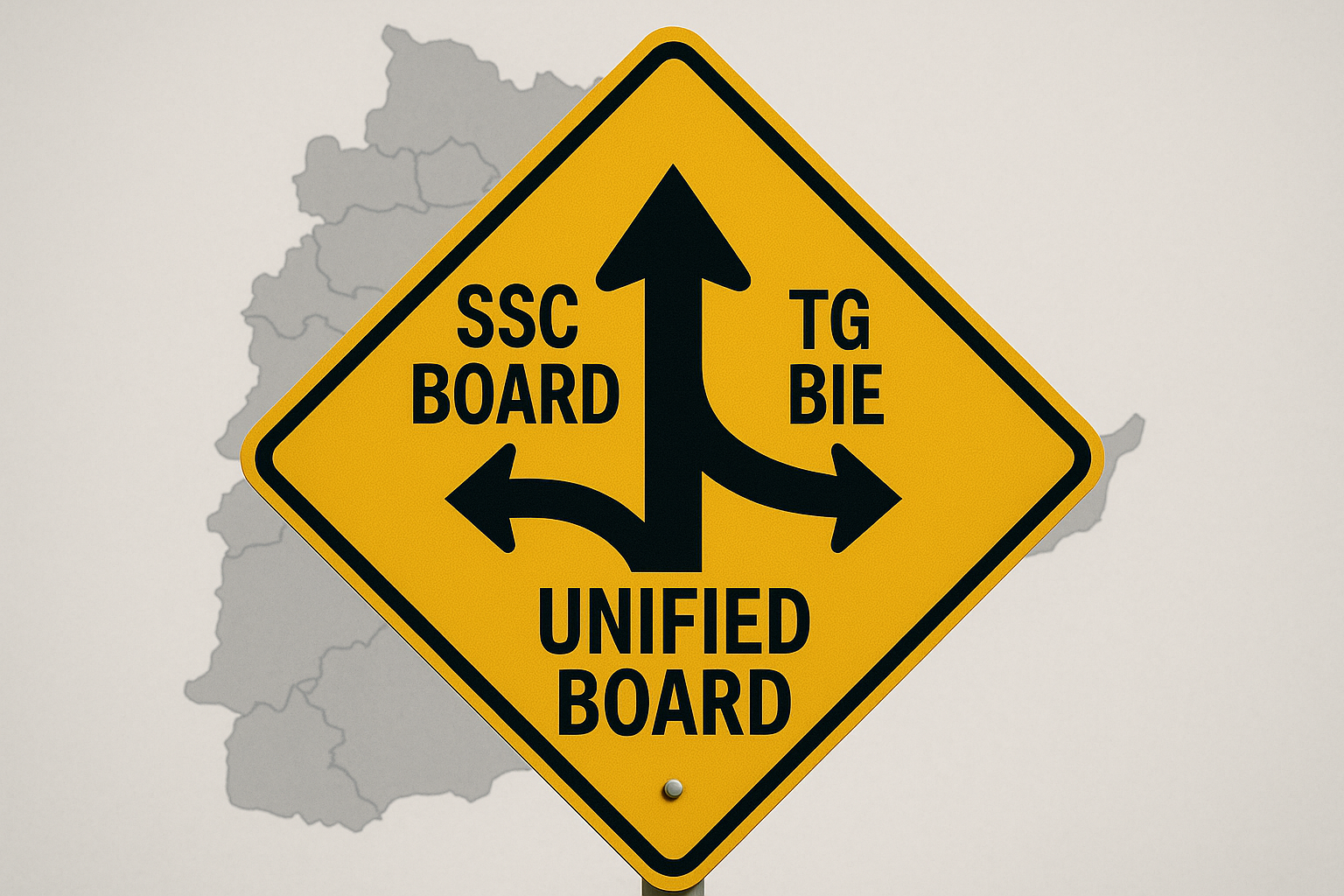
One Board, One System? Telangana May Merge Inter & School Boards
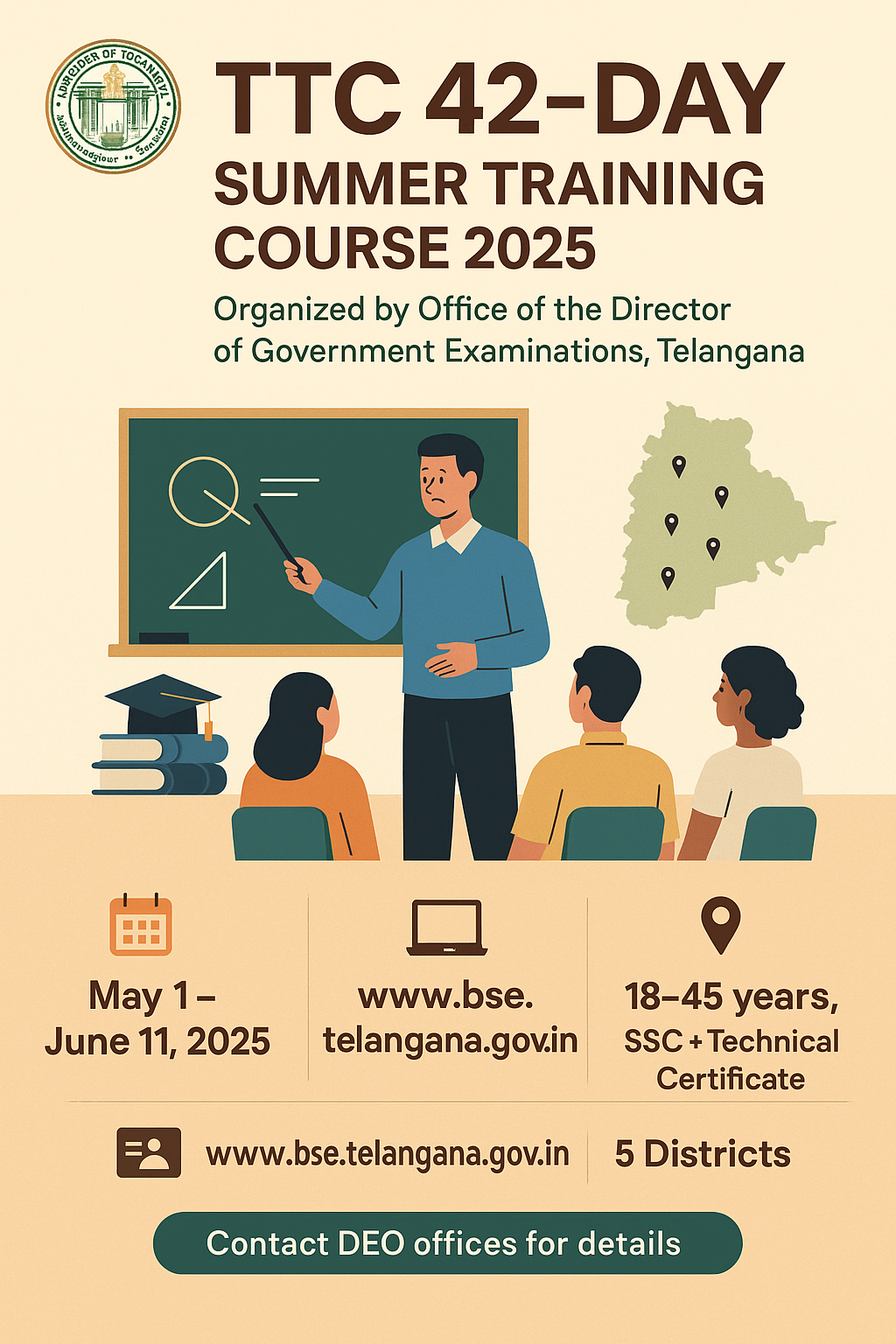
Technical Teacher’s Certificate (TTC) 42-Day Summer Training Course Announced in Telangana

Indian Army Recruitment 2025–26: Registration for Agniveer Selection Extended – Apply Now


-
News1 year ago
One Board, One System? Telangana May Merge Inter & School Boards
-
Exams & Results2 years ago
Technical Teacher’s Certificate (TTC) 42-Day Summer Training Course Announced in Telangana
-
 Scholarships2 years ago
Indian Army Recruitment 2025–26: Registration for Agniveer Selection Extended – Apply Now
-

 Exams & Results2 years ago
Top Competitive Exams in May 2025: Key Dates, Details, and How to Prepare
-

 Sports2 years ago
Why Only Cricket Gets the Spotlight in Indian Sports and What Will Happen if We Don’t Address It
-

 Scholarships2 years ago
Latest Scholarships: National and International Opportunities 2025
-

 Sports2 years ago
IPL Auction 2025: Big Buys, Surprise Picks, and New Team Strategies
-

 Careers & Jobs1 year ago
Accenture to Promote 50,000 Employees Globally This June